





The Results Are: In: E-Tools and Hybrid Vehicles Work!
As announced in February 2025, the Center for Natural Lands Management (CNLM) purchased two hybrid trucks and several professional-grade electric chainsaws and line trimmers as a pilot project to directly compare the performance of electric equipment and hybrid vehicles with gas-powered counterparts and to reduce emissions from land stewardship operations. Made possible through a generous grant from the Roger I. and Ruth B. MacFarlane Foundation, the project also set out to answ er a practical question facing many land stewardship organizations: Can professional-grade electric equipment and hybrid vehicles meet the real-world demands of land stewardship—across varied conditions—without compromising effectiveness, safety, or efficiency?
After a year of real-world use across CNLM preserves in California and Washington, the pilot project is complete—and the results are clear.
Electric tools were used for routine stewardship activities including invasive species control, habitat restoration, trail and fence maintenance, and fire-preparedness work—across a wide range of vegetation types, climates, and operating conditions.
What the Pilot Project Demonstrated
- Electric tools are effective, quiet, and field-ready

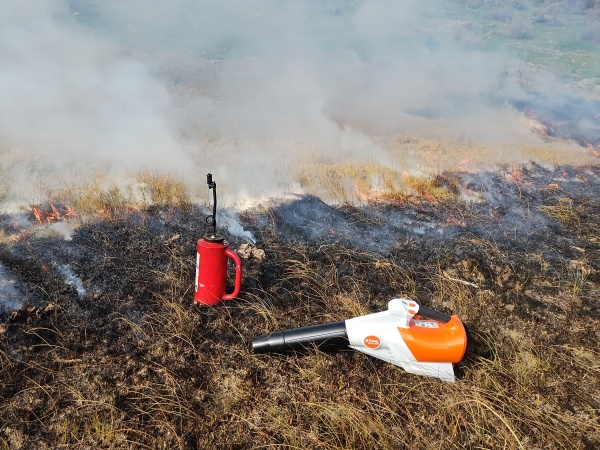
- Electric chainsaws and line trimmers performed well in most conditions—from dense, moist vegetation in the Pacific Northwest to dry and woody habitats in Southern California. In many cases, staff preferred them to gas-powered equivalents.
- Consistently cited benefits included reduced noise, vibration, fumes, and startup time, along with lower maintenance needs and elimination of fuel handling on sensitive lands.
- Hybrid vehicles provide a practical near-term transition
- The hybrid trucks operated under demanding field conditions, including off-road travel and towing. Compared to a previously used gas-powered truck under similar conditions, the hybrids achieved substantially higher fuel efficiency—resulting in fuel cost savings and an estimated reduction of approximately 2.77 metric tons of carbon dioxide emissions in one year.
 “The hybrid truck handled towing and rough terrain without issue, and the fuel savings were immediately noticeable,” reported one participating preserve manager.
- Electric equipment reduces fossil fuel use—right now
- Across electric tools and hybrid vehicles combined, CNLM estimates the pilot project avoided approximately 3.04 metric tons of carbon dioxide emissions in 2025, even after accounting for emissions associated with battery charging. These reductions were achieved while maintaining full stewardship capacity—and, in some cases, improving operational efficiency and safety.
Acting Executive Director, Deborah Rogers, provided this comment: “We started this project with the perspective of determining whether e-tools and hybrid vehicles could perform as well as the gas-powered alternatives. Reduced efficacy or efficiency wouldn’t have been acceptable. After a year of experience, our stewardship staff are eager to purchase even more e-tools and hybrid vehicles in the future. That says it all!”
From Pilot to Practice
Based on these results, CNLM will continue replacing gas-powered tools with electric alternatives where appropriate and using these results to inform future vehicle decisions. Just as importantly, CNLM will share this information with the land stewardship community to help accelerate broader adoption of lower-emission stewardship practices.
This project demonstrates that for organizations engaged in daily, hands-on stewardship, electric equipment supports both conservation outcomes and emissions reduction—today, not just in the future.