


CNLM and CalTrans celebrate successful partnership enhancing riparian brush rabbit habitat
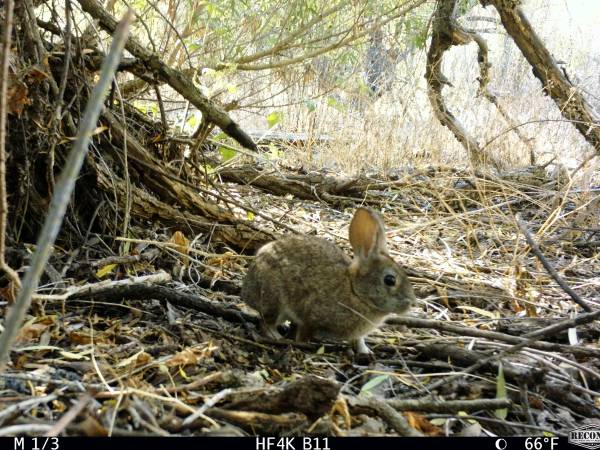
On April 1, 2026, staff from the Center for Natural Lands Management (CNLM) and the California Department of Transportation (CalTrans) gathered along the San Joaquin River to celebrate the success of a five-year habitat restoration and enhancement project at CNLM’s Oxbow Preserve. A 30-acre riparian preserve owned and managed by CNLM since 2004, Oxbow is home to one of the few remaining wild populations of riparian brush rabbit (RBR). The event highlighted a collaborative effort aimed at improving long-term habitat conditions for the state and federally endangered brush rabbit by enhancing high-ground habitat and connectivity areas within the Preserve. The celebration brought together project partners and stakehold,ers, including representatives from US Fish and Wildlife Service, Tri County Wildlife Care, the City of Lathrop, CNLM staff, and the CNLM Board of Directors (Board chair Ken Sanchez).
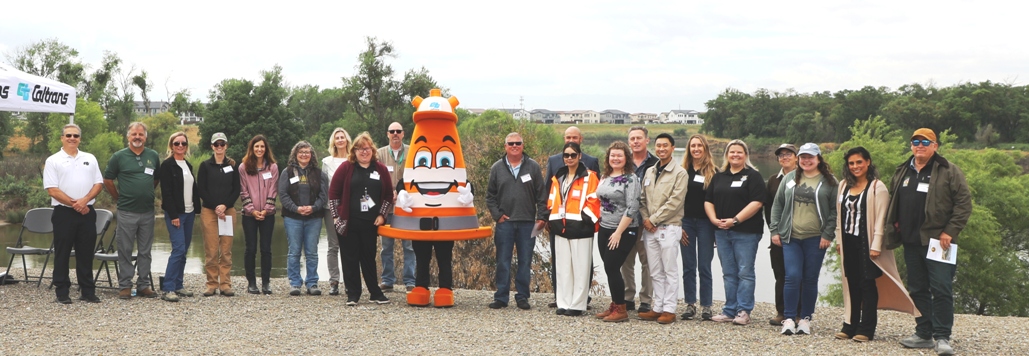
Group photo courtesy of CalTrans.
One of the threats to the riparian brush rabbit throughout its range is periodic flooding along the San Joaquin River. High-water events reduce suitable RBR habitat and concentrate the rabbits into high ground refugia, where they are vulnerable to predation by mammals and birds. In response to these challenges, CNLM and CalTrans partnered in 2020 to implement the High-Water Refugia Enhancement Project as part of mitigation requirements for an interstate widening project in nearby Tracy. The project focused on increasing understory cover on an exposed high ground area within Oxbow Preserve, allowing RBR to better persist during flood events. The elevated berm area was planted with native shrubs and forbs such as California blackberry (Rubus ursinus), California wild rose (Rosa californica), coyote brush (Baccharis pilularis), mugwort (Artemisia douglasiana), and gumplant (Grindelia camporum). It has already had demonstrated success as critical habitat for RBR for during a high-water event in spring 2023, halfway through the project. RBR were observed taking shelter in the project area during that flood event and spread back out into other areas of the Preserve once the water dissipated.

Tri County Wildlife Care staff and ambassador Swainson’s hawk, April 1, 2026. Photo courtesy of CalTrans.
Beyond its primary function as a high-ground refugium for RBR, the restored habitat also benefits a broader ecological community. Oxbow Preserve is home to many nesting and migratory songbirds, other mammals such as otter, raccoon, and squirrels, and, as highlighted by the ambassador birds in attendance at the event from Tri County Wildlife Care, supports nesting raptor species such as Swainson’s hawk.
A series of presentations during the event outlined both the ecological context and operational dimensions of the project, including three talks by CNLM staff. CNLM Executive Director Dr. Deborah Rogers spoke about CNLM’s long-term involvement at Oxbow Preserve and the organization’s role in managing conservation lands and projects across California. Dr. Jamie Rudd, Manager of CNLM’s Species Research and Recovery Program, provided an overview of the biology and conservation status of RBR, emphasizing the species dependence on intact riparian ecosystems like that at Oxbow Preserve. Preserve Manager Erik Gantenbein reflected on the projects’ development, implementation, and outcomes, highlighting the importance of adaptive management and long-term monitoring in achieving restoration success.

CNLM Preserve Manager Erik Gantenbein presenting on the High Water Refugia Enhancement Project, April 1, 2026. Photo courtesy of CalTrans.
The successful partnership between CalTrans and CNLM on this project demonstrates how sustained investment and collaboration can help restore riparian ecosystems and increase the resilience of endangered species like the riparian brush rabbit. Looking forward, CNLM will continue its perpetual stewardship efforts at Oxbow Preserve, including monitoring riparian brush rabbit abundance via wildlife cameras, habitat management, and protection activities.
Due to the sensitivity of the species, the Oxbow Preserve is not open to the public. However, interested individuals can learn more about the Preserve and the surrounding habitat at CNLM’s website: Center for Natural Lands Management | Oxbow
For more information on Caltrans projects within San Joaquin County, please visit https://dot.ca.gov/caltrans-near-me/district-10/district-10-current-projects#cnty-sanjoaquin